Research
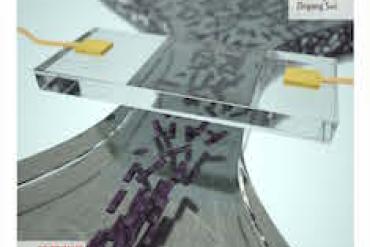
A team of UCSB postdocs and graduate students in the Begley Lab provided the cover of the December issue of Extreme Mechanics Letters. Their work "Acoustic field controlled patterning and assembly of anisotropic particles", explores highly-organized particle assembly at the microscale and carries transformative implications for fields ranging from medical diagnostics to materials-by-design.
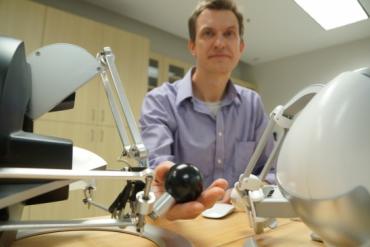
A Sensitive Subject": UCSB Researchers Lead Break-Through in the Science of Touch
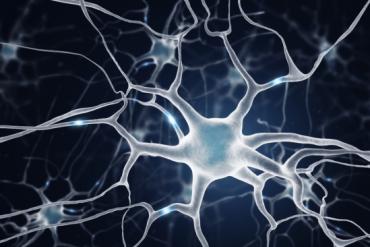
"It's A Small World" - UCSB's Linda Petzold and Cellular Timekeeping
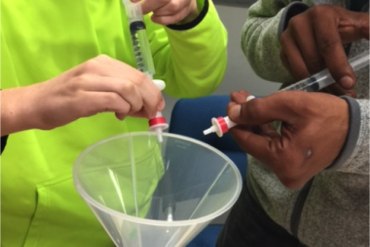
Once again, UCSB Mechanical Engineering's Prof. Sumita Pennathur is reaching out to local schools and finding new ways to get kids hooked on STEM! In the last year, the Pennathur lab has been able to perform outreach activities with over ten local 3rd grade and 5th grade classrooms in the Santa Barbara and Goleta school districts.

Whether building organs or maintaining healthy adult tissues, cells use biochemical and mechanical cues from their environment to make important decisions, such as becoming a neuron, a skin cell or a heart cell. Professor Campas and his research group have developed a powerful new technique that reveals for the first time the mechanical environment that cells perceive in living tissues — their natural, unaltered three-dimensional habitat.

UCSB engineer shows how minimizing fluid friction can make oceangoing vessels more fuel-efficient and reduce harmful emissions.
Our bodies, with all their different features and variations, are the result of well-orchestrated processes that dictate what and how cells develop into the organs and tissues that comprise our anatomy. Much of the information is genetic — the result of DNA — and biochemical signals also play a role. Yet another, and still somewhat mysterious, mechanism for embryonic development exists in the tiny mechanical forces that cells exert on each other in the process.