In the News
The 5th annual Southern California Micro and Nanofluidics Symposium was held on Friday, August 24th, 2018 at the Los Angeles County Arboretum. This year’s symposium, generously sponsored by Amgen and UCLA California NanoSystems Institute, brought together students and faculty from UC campuses to share research ideas and progress, seek opportunities for collaboration, and learn more about recent developments in the field of micro- and nano-fluidics.

You’ve probably seen them, perhaps on long roadtrips: wind turbines with enormous, hypnotic rolling blades, harnessing the clean power of wind for conversion into electric energy. What you may not know is that for the explosion in the number of wind turbines in use as we embrace cleaner sources of energy, these wind farms are quite possibly not as productive as they could be.
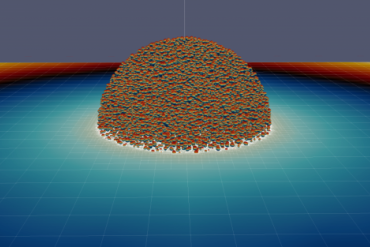
It is likely that in the not-distant future wounds will heal faster with the help of an electrical pulse that promotes rapid cell growth. The same type of pulse may be used for more efficient and effective delivery of drugs to fight disease. Such treatments rely on a process known as “electroporation,” in which an electrical field is applied to cells to increase the permeability of the cell membrane. Already electroporation is being used experimentally to deliver chemotherapy into cancerous cells, but such treatments are in their infancy and involve a great deal of trial and error.
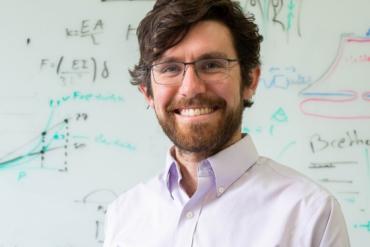
Emergency intubation in the field is a challenge for everyone involved, most especially the patient. Paramedics and EMTs have to contend with less than ideal circumstances while they attempt to insert a stiff laryngoscope down the throat and into the lungs of a nonresponsive patient.
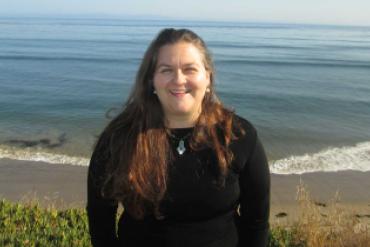
We are delighted to announce that Professor Megan Valentine has agreed to serve as Co-Director of the California NanoSystems Institute (CNSI). Previously, Professor Valentine was Associate Director of CNSI at UC Santa Barbara.
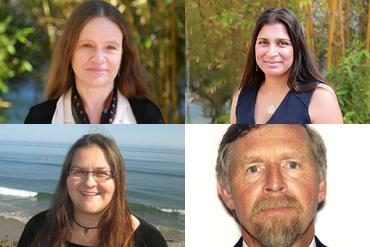
Three professors from the UC Santa Barbara College of Engineering and one from the Department of Molecular, Cellular and Developmental Biology (MCDB) have been named Fellows of the prestigious American Institute for Medical and Biological Engineering (AIMBE), recognizing their interdisciplinary achievements.
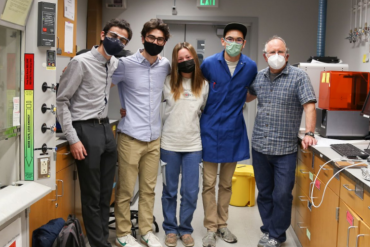
The Microfluidics Lab (MFL) at UC Santa Barbara is one of the few campus labs where relatively little research is conducted. It is, rather, an enabling lab, where researchers and lab staff fabricate tools required for their experiments. Established in its current location in Elings Hall ten years ago, the lab began life closely aligned with semiconductor research, according to longtime manager, Dave Bothman, who has spent 36 years at UCSB and who, though officially retired, continues to work part-time in the MFL, which gets its name from the word for the easily described process of microfluidics, which Bothman says, is “simply making devices that have really small channels for fluids to flow through.”
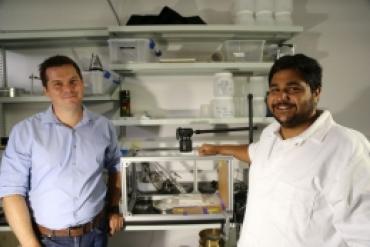
Landslides are one striking example of erosion. When the bonds that hold particles of dirt and rock together are overwhelmed by a force — often in the form of water — sufficient to pull the rock and soil apart, that same force breaks the bonds with other rock and soil that hold them in place. Another type of erosion involves using a small air jet to remove dust from a surface. When the force of the turbulent air is strong enough to break the bonds that hold the individual dust particles, or grains, together and cause them to stick to the surface, that’s erosion, too.

Professor Elliot Hawkes and group have been featured on the YouTube channel Veritasium highlighting their world's highest jumping robot.
In a study that confirms its promise as the next-generation semiconductor material, UC Santa Barbara researchers have directly visualized the photocarrier transport properties of cubic boron arsenide single crystals.