In the News
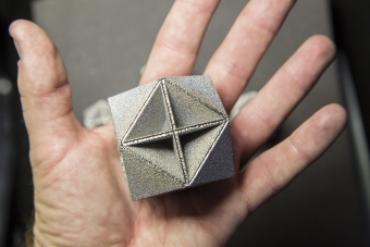
In 2015 UC Santa Barbara mechanical engineer and materials scientist Jonathan Berger developed an idea that could change the way people think about high-performance structural materials. Two years later, his concept is paying research dividends.

Graduate student Aimal Khankhel in the Biomolecular Science and Engineering Program at UCSB has won the prestigious and competitive NSF Graduate Research Fellowship for his research on developing new fundamental understanding of the role of mechanical signals in tissue development and maintenance.
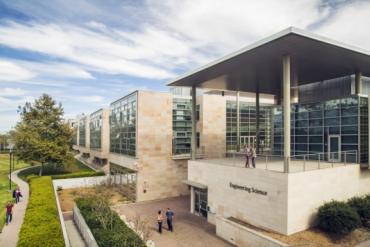
With smart homes, self-driving cars and other technology making the world an ever more automated place, state-of-the-art automation and control has become essential. And UC Santa Barbara is among those leading the way.

For most of us, fluid dynamics and mechanics aren’t particularly significant — that is, until we’re white-knuckling it on a bumpy plane ride or trying to stay buoyant in unusually bubbly water. The way we navigate through air and water may one day be improved thanks to UC Santa Barbara researchers studying the complex properties and interactions of fluids.

Mechanical Engineering Associate Professor Megan Valentine is featured in the November issue of the Biophysical Society Newsletter with an exciting article about her professional trajectory and the broad set of interdisciplinary projects in which she is involved. To read the original feature please visit the Biophysical Society Newsletter.

Professor Megan Valentine is featured in the website of the American Society of Mechanical Engineers (ASME) with the article "Microhammer Aids Understanding of Brain Trauma".
Ink dye, soap, milk and fluid mechanics make for a fascinating, and award-winning, work of art.

Ever wondered how groups of cells managed to build your tissues and organs while you were just an embryo?
Using state-of-the-art techniques he developed, UC Santa Barbara researcher Otger Campàs and his group have cracked this longstanding mystery, revealing the astonishing inner workings of how embryos are physically constructed. Not only does it bring a century-old hypothesis into the modern age, the study and its techniques provide the researchers a foundation to study other questions key to human health, such as how cancers form and spread or how to engineer organs.